Who is Lucius Mummius?
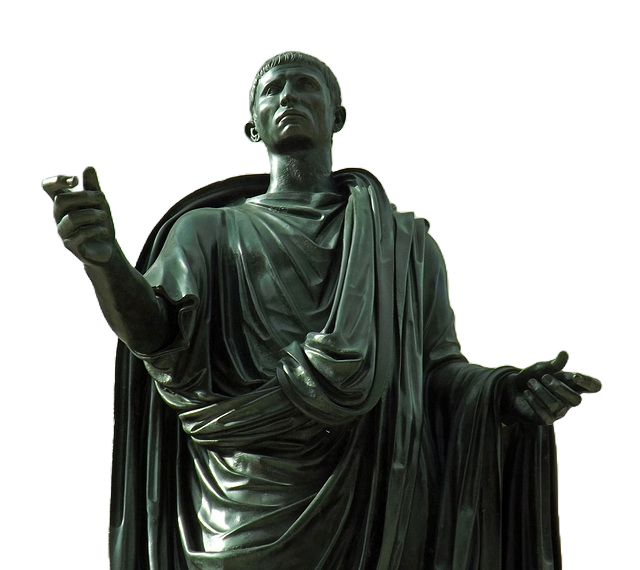
Lucius Mummius is often overlooked in Roman history, yet his actions reshaped the ancient world. The Butcher of Corinth. The general responsible for the conquest of Greece. While some scholars rightly debate whether he formally made Achaea a province, he unquestionably ended Greek resistance. Yet when he is remembered, it is for what he destroyed rather than who he was. In No Fire When Tiber Freezes, I set out to uncover the man behind the ruins.
The Historical Lucius Mummius
Mummius rose from political obscurity to command one of Rome’s most infamous campaigns – the sack of Corinth in 146 BCE. As consul, he crushed the Achaean League and cemented Roman dominance over Greece. Yet despite his military success, history remembers him less for his victories than for an offhand remark – his supposed ignorance of Greek art.
According to one anecdote, Mummius warned that those transporting Corinthian treasures to Rome would have to replace them if lost or damaged – an order often cited as proof of his crude pragmatism and lack of cultural refinement. This remark has fuelled the image of Mummius as a man who saw plunder in purely material terms, indifferent to the artistic and historical significance of what he had seized.
Yet there was more to him than this. When a Greek youth recited Homer to him – ‘O three and four times blessed are those Greeks who died on the wide plain of Troy’ – Mummius was moved enough to set the young man free.
The image of an unpolished, uncultured soldier – dismissive of Greek civilisation – was one cultivated by his opponents in Rome, eager to diminish the achievements of the man who brought Greece under Roman rule.
A Novus Homo Unlike Any Other
Mummius was not the first, nor the last, novus homo to reach the consulship, but he was unique in one respect – he earned an agnomen before acquiring a cognomen. Unlike most Roman aristocrats, who inherited names reinforcing their family’s legacy, Mummius had none. Instead, in recognition of his achievements in Greece, he was awarded the agnomen – Achaicus. His family later appears to have adopted this as their cognomen, including his descendant, the mother of the emperor Galba. This is highly unusual, perhaps even unprecedented, and suggests that despite his achievements, Mummius remained an outsider in Rome’s elite circles.
Lusitania: Defeat and Redemption
Before his Greek campaign, Mummius commanded in Lusitania (modern Portugal and western Spain). In 153 BCE, he suffered a crushing defeat – his forces routed, his reputation hanging in the balance. A less determined man might have faded into obscurity, but Mummius did not. He regrouped, restructured his army, and launched a decisive counterattack. Catching the Lusitanians off guard while they were plundering, he turned disaster into triumph – lifting the siege of Ocile and inflicting enormous casualties. His triumph in Rome was the first in Hispania for decades, a testament to his resilience and ability to learn from failure.
This tenacity defines my version of Mummius. He is not an infallible hero, nor is he a man who easily fits within Rome’s rigid social order. He is pragmatic, hardened by war, but keenly aware that his victories do not place him on equal footing with the aristocrats who still hold power.
Yet Mummius was not a conventional Roman general. Ancient sources suggest a man at odds with the prevailing attitudes of his time – unusually lenient and generous in an era of increasing austerity. Dio Cassius notes his clemency, while Liv Yarrow highlights how his treatment of the conquered differed from that of many of his contemporaries (source). This contrast between his military pragmatism and his personal restraint makes him a compelling and often misunderstood figure.
The Politics of Corinth’s Destruction
The destruction of Corinth was not just about punishing a rebellious city – it was a calculated move that reshaped the economic balance of the Greek world. The Senate, increasingly influenced by Rome’s mercantile elite, had an interest in eliminating a commercial competitor. Corinth was a wealthy trade hub, and its destruction ensured that its riches – its art, its resources, and its economic influence – flowed into Roman hands. While Mummius led the legions, the forces driving Rome’s expansion were no longer just military – they were financial.
Mommsen argued that Mummius was a tool of the Roman mercantile class, carrying out destruction at their behest. While he was not the only general shaped by Rome’s shifting priorities, his campaign in Greece reflected a Republic increasingly driven by profit rather than conquest for its own sake. The sack of Corinth was not merely an act of war but a strategic erasure of an economic rival.
Portraying Mummius in No Fire When Tiber Freezes
History remembers Mummius for what he destroyed. I wanted to explore the man left standing amid the ruins.
In No Fire When Tiber Freezes, Mummius is not just a soldier; he is a man caught between duty and conscience, a plebeian among aristocrats, a war hero surrounded by politicians who see him as useful but never quite one of them. The novel begins in the aftermath of his victories in Greece and Carthage, but Rome is not the city he left behind. Corruption is spreading. Power is shifting. And men like him – men who fought for Rome – are beginning to realise that the Republic they defended is not defending them.
Mummius is often reduced to a name in history books, a footnote attached to the destruction of Corinth. A far cry from his own city – Virgil singles out Mummius in Anchises’ parade of future Roman heroes in Book VI of the Aeneid. But Mummius lived in a Republic on the verge of upheaval, a world where military success no longer guaranteed influence, and where new men, no matter how victorious, remained on the fringes of power.
His story is not just about conquest – it is about survival in an empire that is starting to consume itself.